

light luxury kitchen cabinet door aluminum alloy embedded invisible U-shaped handles
Kitchen Handless Rail System Profile Handle Kitchen Aluminum Profile for Kitchen Cabinet
Bruce Wang
11/21/20252 min read
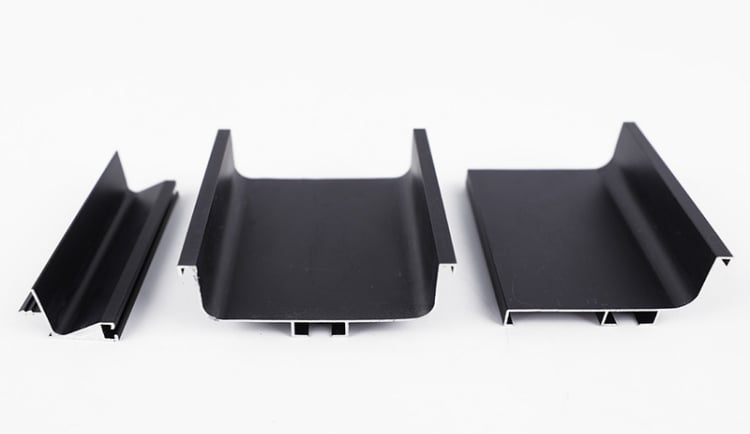
Customized aluminum alloy concealed extended cabinet door C-shaped without pull handle.
custom-made furniture aluminum profile cabinet handles
I. Customization Requirements
Before starting the process, you need to clearly define the following specific requirements:
Size specification:
Length: The exact length of the handle.
Section dimensions: Key dimensions of the profile, such as width, height, and wall thickness.
Installation holes: The positions, diameters and spacings of the screw holes, ensuring their compatibility with the cabinet doors/drawers.
Appearance Design:
Section shape: Provide detailed section design drawings (preferably in CAD/DXF format), or choose from the existing molds of the manufacturer.
Color and Surface Treatment:
Anodizing: Common colors include champagne gold, titanium gold, black sand, and stainless steel color, etc. The colors are rich and it is both wear-resistant and corrosion-resistant.
Powder coating: It can achieve special colors (such as those on the RAL color chart), has a soft touch, and has strong UV resistance.
Electrophoresis: The surface is as smooth as a mirror, presenting a high-end and elegant appearance.
Wood grain transfer: Presenting wood textures on aluminum, meeting specific style requirements.
Materials and Techniques:
Aluminum alloy grade: Usually, 6063 aluminum alloy is selected, which has good plasticity and thermal conductivity and is suitable for extrusion.
Special processing: Whether CNC machining, bending, logo engraving, etc. are required.
II. Customization Process
The following are the specific cooperation steps, which are usually carried out jointly by you (the demander) and the profile manufacturer:
The process has begun.
Demand communication and quotation:
You are required to provide: initial ideas, design drawings, technical requirements or samples.
Manufacturer provides: Based on your information, a process assessment, a preliminary quote and a production cycle estimation will be conducted.
Design Confirmation and Mold Release:
If the new cross-sectional design is adopted, mold development is required. You need to provide precise cross-sectional drawings, and the manufacturer will produce the mold and confirm it.
If the existing molds are used, this step can be omitted.
Signing the contract and paying the deposit:
After both parties confirm the price, delivery date and technical standards, a contract will be signed and a deposit (usually including the mold fee) will be paid.
Proofreading and Confirmation:
The manufacturer produces small batches of samples (usually 1-3 meters in length) for you to test the dimensions, color, texture and smoothness.
This is a crucial step. Only after the samples are confirmed can the mass production commence.
Mass production:
After the samples were confirmed, the manufacturer began to carry out batch extrusion, fixed-length cutting, drilling, and surface treatment (such as anodizing) etc.
Quality inspection and packaging:
The manufacturer conducts a comprehensive inspection or sampling test on the finished products to ensure that there are no scratches, color differences, burrs, or other defects. Then, they properly package the products using materials such as pearl cotton.
Delivery and Receipt:
After paying the final installment, the manufacturer will arrange for the logistics to deliver the goods. After you receive the goods, please check the quantity and quality to complete the entire process.
Address
Hengshui City, Hebei Province, China
Contacts
+86 19033390689
andy@sinohaike.com